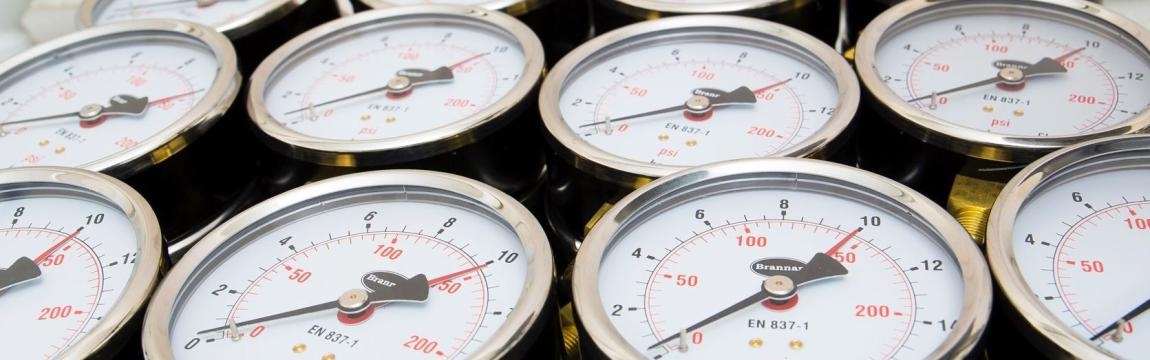
Stainless Steel is renowned for its resilience and as a result is commonly used across the industrial sector in varying forms depending on the specific requirements of application. All steels have the same basic iron and carbon composition, but stainless steel also contains chromium, which adds anti-corrosive properties to the steel, allowing stainless steel to withstand more time and abuse before showing signs of wear.
There are multiple grades of stainless steel, each containing a slightly varying alloy composition and therefore presenting different physical characteristics.
Stainless steel must contain at least 10.5% chromium. Depending on the grade, it may contain considerably higher levels amongst additional alloying materials such as molybdenum.
Brannan offer two grades of stainless steel within our pressure gauge range. These are the two most common types of stainless steel, grade 304 and grade 316. The key difference between the two grades is the addition of molybdenum, an alloy which drastically enhances corrosion resistance to grade 316.
Considerations when choosing which stainless to use:
- Environment
- Temperature of Operation
- Cost – with 304 typically less expensive than 316
Grade 304 stainless steel is generally regarded as the most common stainless steel. It contains high nickel content that is typically between 8 and 10.5 percent by weight and a high amount of chromium at approximately 18 to 20 percent by weight.
- Cost effective option where applications require good corrosion resistance
- Suitable for environments subjected to constant moisture, water and damp
- Better corrosion resistance than black steel/ galvanised steel
- Con: Susceptible to corrosion attack in corrosive environments such as costal environment of corrosive chemicals.
Like 304, Grade 316 stainless steel has high amounts of chromium and nickel. The major difference between 304 and 316 is the chemical composition, with 316 containing a significant amount of molybdenum resulting in increased corrosion resistance.
- Superior corrosion resistance for corrosive environments
- Suitable for application subjected to sea spray, saltwater and exposure to corrosive chemicals
- Superior corrosion protection to grade 304
In some applications, a combination of both grade 304 and grade 316 may be the most appropriate solution for a pressure gauge, incorporating a 316 grade to the materials that may be subject to harsh treatment such as corrosive chemicals and 304 grades to materials less exposed.


Our experienced, friendly team are happy to help. Get in touch today.
Choose from our range of catalogues to see our full range of products.
This site uses cookies to monitor site performance and provide a mode responsive and personalised experience. You must agree to our use of certain cookies. For more information on how we use and manage cookies, please read our Privacy Policy.