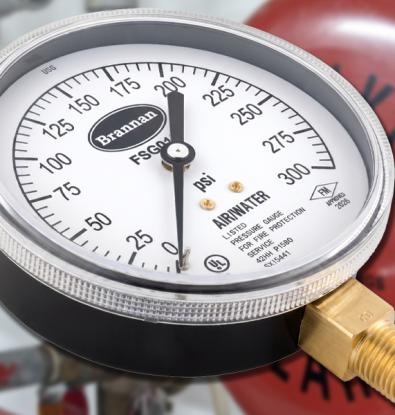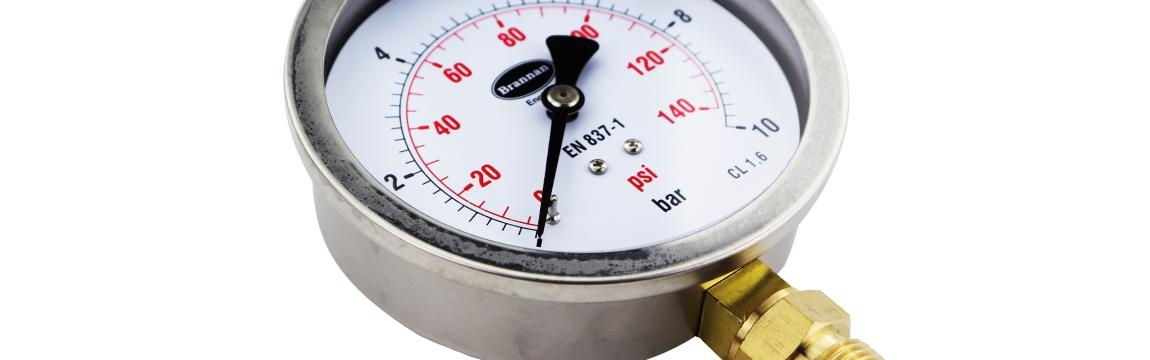
A filled Pressure gauge is essentially a dry pressure gauge where the casing has been filled with fluid, usually glycerine or silicone, although other liquids can be used.
They are usually used where the pressure gauge is going to be operating in a harsh environment and is likely to encounter vibrating loads and dynamic shock.
- Dampens mechanical vibration
- Dampens pulsation caused by pressure oscillation and pressure spikes
- Lubricates internally moving parts reducing everyday abrasion and material fatigue counteracting failure.
- Prevents internal corrosion by moisture and other corrosive liquids away – especially in environments where condensation will be a factor.
- Decreased possibility of moving the pointers mechanism away from zero
- Decreased prospect of inaccurate readings
- Increase operating lifespan of the pressure gauge.
Glycerine is the most commonly found liquid in liquid filled pressure gauges. It is a relatively inexpensive clear material well suited to applications where either oscillating pressures or vibration are present. The damping effect of the glycerine will stable the movement of the pointer, making it easier to read against the scale.
Glycerine gauges operate best in the -20C to +60C temperature range.
In comparison to Glycerine, Silicone has a lower viscosity and is a better suited material for applications with extreme temperature variations. It is primarily relied upon when a pressure gauge requires protection against vibration or oscillation in a temperature range greater that 60C or below -20C.


Our experienced, friendly team are happy to help. Get in touch today.
Choose from our range of catalogues to see our full range of products.
This site uses cookies to monitor site performance and provide a mode responsive and personalised experience. You must agree to our use of certain cookies. For more information on how we use and manage cookies, please read our Privacy Policy.